
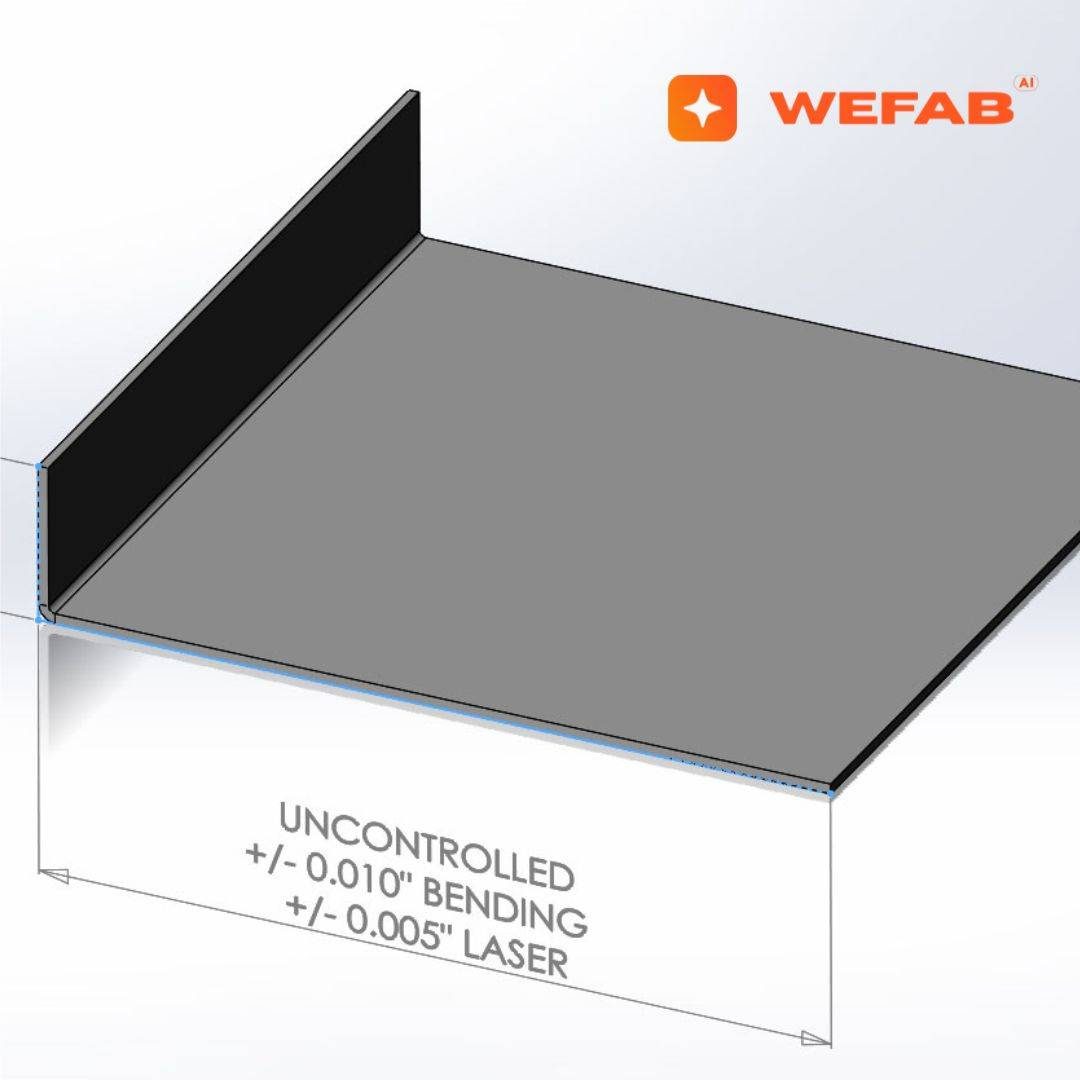
In hardware manufacturing, ensuring precise tolerances—acceptable variations in a part’s dimensions or shape—remains a critical challenge for hardware makers in climate tech, robotics, and consumer goods. From EV battery enclosures to intricate robot arm assemblies, maintaining accurate tolerance bounds is essential for seamless component integration and optimal performance. However, manual tolerance checks can be time-consuming and prone to human error, often slowing production and increasing costs. With AI-driven solutions now capable of verifying tolerances instantly, manufacturers can achieve a balance between precision and efficiency. The following sections explore how AI enhances tolerance verification, its impact on cost, lead time, and vendor selection, and why adopting this technology is a game-changer for modern production.
Why Tolerance in Manufacturing Matters
Tolerance is the single most important aspect that defines how devices function, how quickly they can go to market, and their overall cost of manufacturing. In hardware, climate tech, robotics, and EV, a slight miscalculation in part size or fit can lead to delays, scrap, and potential safety hazards. Efficient tolerance analyses bridge design objectives with actual manufacturing, creating immediate business impact.
1. Product Functionality
Tight tolerances define the margin in which a part will function in its actual task, so each part is ensured to fall within the functional minimum. If a shaft is oversized or a hole too small, bearings can jam or leak. Think of it like battery casings in EVs that must have exact wall thickness to avoid thermal failures.
Tolerance issues can make products fail or perform inadequately, risking recalls or warranty claims. It has to be consistent — and factories can only guarantee that every batch is as good and safe as they want it if they hold tolerances.
|
Tolerance (mm) |
Operational Capability |
|---|---|
|
±0.01 |
High precision, critical |
|
±0.05 |
Standard fit, general use |
|
±0.10 |
Non-critical, loose fit |
2. Part Interchangeability
Interchangeable tolerances cause pieces to exchange effortlessly, reducing the repair time & labor. This is crucial in modular products–such as robotic arms—where field replacements need to fit first time, every time.
Tight tolerances keep inventory lean — you don’t have to have extra variants or rework. If parts don’t fit, supply chain costs soar as crews sort, match and hoard more inventory. Cost-wise, designing for interchangeability saves dollars by cutting down on custom fixes and simplifying procurement.
3. Assembly Process
Precision matters. If tolerances are loose, teams might crank on force fits or shim gaps, wasting time and cash. Mismeasurement can delay launches for weeks.
Clear tolerances mean workers spend less time checking and reworking, both of which slow lines and increase labor. Thinking about tolerance stack-up at the design level prevents it from stacking up later during assembly. Doing so results in less mistakes and more consistent throughput.
4. Performance and Reliability
Tight tolerances increase reliability—particularly in applications where safety and repeatability count, including EV drive systems or consumer tech hinges. Even slight misalignment can damage life span or cause premature failure.
Achieving global standards for safety and quality relies on unambiguous tolerance specs. In some instances, high-precision fits increased turbine life by 30%, underscoring the direct connection between tolerance and enhanced results.
5. Cost Control
Smart tolerance decisions reduce scrap, rework, and wasted material — which lowers cost. If tolerances are unnecessarily small, costs go up quickly.
Automated tolerance checks can capture errors early, saving money overall. Less scrap equates to a more sustainable use of resources—a win for both budgets and regulatory compliance.
How Does Manual Tolerance Checking Create a Bottleneck in the Design Process?
Manual tolerance verification poses a significant challenge for engineers and sourcing teams, often becoming a slow process that heavily relies on craftsmanship. This creates a constant tension between design, manufacturing, and supply chain, especially in industries like aerospace where engineering tolerances are critical. Minute mistakes in tolerance values can lead to significant delays, prompting businesses to weigh the tradeoffs between manual and automated verification methods.
Design Bottlenecks
Manual verification muddles the design process. Each dimension or fit that requires manual verification occupies engineers — particularly with high-mix, low-volume runs. Feedback lags and project schedules extend, as designs sit in review. When tolerance specs need to be double checked or clarified, revisions pile up, pushing deliverables even later.
When feedback is delayed, teams can’t proceed with confidence. Small mistakes in tolerance interpretation might surface late in the cycle, triggering costly design iterations. Statistical tolerancing aids this process by applying probability models, lessening the pressure for every part to fall within the narrowest limits and enhancing both efficiency and quality.
Approaches such as tolerance-cost optimization offer a way to balance design freedom with cost management.
Production Errors
Common manufacturing glitches arise from overlooked or misunderstood tolerance specifications. Assemblies can break down if parts don’t fit, or worse, products get booted in final inspection. In such cases, insufficient manual verification will frequently allow some out-of-spec parts to sneak by. When manufacturers confuse tolerance notes–especially across global teams–costs and delays pile up fast.
Every bug counts. Scrap rates increase, rework loops lengthen lead times and the late error discovery typically implies shipping delays. Automated tolerance analysis tools, like AI-driven inspection systems, reduce these risks by identifying problems early.
This shift not only minimises defects, but facilitates compliance with global standards, important for hardware within regulated industries.
Supply Chain Friction
Tolerance disagreements are a frequent source of conflict between design and manufacturing groups. Vague specs, on the other hand, cause supplier confusion — vendors end up uncertain about how much leeway variation is acceptable. These communication gaps can result in pieces being shipped back, contracts being re-negotiated, and deadlines slipping.
Good collaboration begins with standardized tolerance documents and digital, change-tracking platforms. AI tools now assist with sharing real-time data and flagging outliers before they become an issue.
Vendors love having unambiguous, accessible requirements — they make meeting quality goals simple. Process tolerancing and new digital workflows reduce breakage, maintain good relationships, and cultivate trust across the supply chain.
Struggling with Tolerance Issues Slowing Your Production?
Optimize with Wefab.ai’s AI solutions, offering instant tolerance checks, reduced scrap, and faster lead times for climate tech and robotics projects.
Boost Your Manufacturing Precision with Wefab AI Today!
What Are the Hidden Costs Associated with Poor Tolerance Management?
Tolerance in production is more than a technicality; it encompasses engineering tolerances that dictate cost, speed, and quality for any hardware startup or seasoned player. Oversights in tolerance management, such as incorrect tolerance analysis, seldom present themselves as line items, but their impact cascades through the supply chain, leading to costly tolerance deviation issues.
Financial Drain
Rework from tolerance errors can devour budgets quickly, transforming a $100 standard part into a $300–400 bill when tight tolerances are specified for unclear reasons. Over-specifying tolerances in prototypes adds 25–40% to costs, not just on materials but through longer machine time and additional inspection steps. It is in the design phase that most savings are won or lost. Lax tolerance planning here results in periodic waste downstream.
Quality check on tight-tolerance work contributes 15–25% to part costs, versus 5–10% for standard parts, particularly if you’re treating every feature as mission critical. Stainless steel and other hard-to-machine materials need slow feeds, increasing production time 40-60%, adding costs even more. Rush jobs for tight-tolerance parts can easily double regular prices because of labor overtime and scheduling interruptions.
Market Opportunity
A late product launch frequently signifies that you no longer will hit some of the fast-moving windows in climate tech or consumer electronics. Long lead times for tight tolerance machining—often 1–3 weeks longer—can hold up shipments and freeze revenue. This not only fuels direct costs, but amplifies opportunity loss when rivals launch first and capture mindshare.
Timely launches, by contrast, engender trust, drive early adopters and reinforce brand leadership. Good tolerance management enables swift response to market changes. Companies that standardize non-critical dimensions and confine tight tolerances to key features can reduce machining costs by 40–60% and accelerate cycles. A recent robotics startup reduced launch delays by optimizing their tolerance stack-up, boosting both cost and first-to-market advantage.
Innovation Penalty
Manual tolerance checks search and slow new product introduction. Design teams waste additional cycles on validation, leaving them a step behind nimbler competitors. Tied to detailed planning, lengthy review and rework cycles that push out innovation timelines — especially when each iteration signifies another round of expensive inspection.
This compounded lag punishes teams seeking burst designs. Automating tolerance verification, or AI-driven design-for-manufacturing safe-checks, lets engineers focus on performance, not just compliance. It makes review more efficient, eliminates mistakes, and fosters creativity by unclogging bottlenecks from the product development pipeline.
Embrace Automated Tolerance Verification
Automated Tolerance Verification: Key for Modern Manufacturing It eliminates time-consuming, mistake-prone work in manual tolerance analysis and introduces new levels of speed, accuracy and transparency. With checks automated, manufacturers have immediate, dependable insights, allowing engineers to concentrate on design and process optimization.
This transition is not just a technical enhancement—it’s a pragmatic answer to market pressures for improved quality, compressed deadlines, and worldwide competition. Wefab’s AI-first contract manufacturing platform is built around these principles, offering instant, actionable DFM and tolerance verification to help hardware teams move faster and smarter.
Instant Feedback
Real-time tolerance feedback changes the way teams work. Designers receive immediate feedback on whether or not a design is manufacturable, or if tolerances are too restrictive or too generous for a given process. That catches expensive mistakes before they get to the shop floor, keeping your projects on schedule and budget.
Fast tolerance checking slashes project timelines, particularly in fields such as robotics and EVs where every design cycle counts. Solutions such as AI-driven DFM checks and RSS tolerance stack analysis provide immediate feedback.
Automated systems flag problems immediately when they arise — be it a misaligned hole or a stacked tolerance issue in X, Y or Z. These rapid checks enable teams to make swift, assured modifications, minimizing the chance of last-minute rework.
Material Intelligence
Infusing design with material intelligence delivers a significant advantage. Knowing a material’s strength, stiffness and machinability ahead of time helps establish reasonable tolerances. This is crucial when parts have to fit just so, or when working with more lenient tolerance approaches such as injection molding.
Sophisticated analytics direct material selection, forecasting how variations in material affect part fit and function. Automated tolerance checking simulates various scenarios, illustrating the cost-quality-waste trade-offs.
This results in smarter decisions, reduced scrap, and increased quality. The right material and tolerance selections, early, keep projects on budget and on time.
Process Transparency
Transparent, open processes make all of us work better. Automated tolerance systems log each check and decision, providing a common perspective for design and manufacturing groups. This enhances quality control through early issue capture and simplifies the task of reviewing or modifying specs if things shift.
Collaboration platforms such as Wefab.ai’s enable teams to exchange tolerance data, design changes, and feedback instantly. This transparency establishes trust among engineers, managers, and clients.
Teams can verify, adjust, or discuss tolerances collaboratively, confident everyone is working from the same data.
How Does Manufacturing Tolerance Connect Engineering Decisions with Business Strategy?
Tolerance in manufacturing connects engineering with business strategy. Getting engineering tolerances right is about more than making specs–it defines cost, time-to-market, and ultimately success. Efficient tolerance analyses and optimization turn complicated manufacturing problems into opportunities for innovation.
Predictive Quality
Predictive analytics allows factories to detect quality issues before they escalate. Tracking tolerance data in real time, teams catch small shifts that could damage assembly or function. For instance, AI-powered systems can alert when a part’s width approaches the boundary of its permitted range, allowing teams to address issues prior to inducing expensive slowdowns or recalls.
AI tools now track tolerance adherence between lines, parsing data into sophisticated models that identify trends and forecast failures. This not only maintains product quality, but increases manufacturing reliability—no one wants warranty claims or brand damage from defective components.
Using tolerance analysis software automates checks, ensuring every piece fits and functions as intended, even in high-mix, low-volume runs.
Accelerated Timelines
Tight tolerance management accelerates builds by eliminating rework and last-minute fixes. When squads share crisp specs up front, components fit just so the first time. That’s less waiting, fewer bottlenecks and quicker steps from prototype to market launch.
A global robotics startup reduced delivery time by 15% after adopting digital tolerance tracking. Another climate tech company brought a new product to market earlier than expected by integrating tolerance analysis with their AI-powered assembly robots.
These victories demonstrate how intelligent tolerance engineering has a strategic business impact — keeping projects on track, enabling teams to outpace the competition to market.
|
Benefit |
Impact on Competitiveness |
|---|---|
|
Faster Prototyping |
Shorter product development |
|
Fewer Delays |
Quicker response to market |
|
Lower Rework |
Higher output, more launches |
|
Early Issue Detection |
Stronger brand reliability |
Resource Optimization
-
Use digital tolerance analysis to cut extra material use.
-
Educate teams if tolerance stack-up impacts yield.
-
Automate inspection to catch expensive errors early.
-
Combine tolerance data with process controls for less waste.
Intelligent tolerance effort results in less scrapped pieces and less wasted time. Businesses reduce waste, decrease expenses, and maximize every press run.
That makes operations leaner and more profitable, fueling sustainable growth and healthier customer satisfaction.
Need Expert Support for Tolerance Management?
Partner with Wefab.ai’s specialists, providing AI-driven insights, real-time tracking, and design optimization for consumer goods and EV production.
Connect with Wefab.ai Experts to to Elevate Your Manufacturing Tolerances and Quality!
How Is the Demand for Tighter Tolerances Shaping the Future of Precision Manufacturing?
Precision manufacturing is evolving rapidly, spurred along by demand for quadratic tolerances and improved part fit. Industries such as aerospace, defense, EVs and robotics require parts that can function under demanding loads and environments. This need drives new instruments, intelligent equipment and improved inspection become integrated into everyday manufacturing.
The drive for perfect fit is genuine, but zero-tolerance cannot exist in the actual world—there’s always a slight gap, even with optimal instruments. AI and automation are now key to maintaining tight tolerances. AI-driven services identifies mistakes and marks hazards upfront, reducing cost and delay.
Five-axis CNCs can carve shapes in a single pass, so there’s less opportunity for error from dragging parts. Additive manufacturing, such as metal 3D printing, achieves tolerances in the range of ±0.13 to ±0.25 mm. However, material, part geometry and printing process are significant factors.
These new tools reduce mistakes and accelerate work, but they require expert configuration and calibration, which sometimes can take longer than vintage machining. Tighter tolerances deliver obvious business victories. Tight-fit parts last longer, run better – less wear, less breakdown.
This is crucial for robots, EVs, and energy systems where a tiny tolerance miss can bring entire systems to a halt. As tools get smarter and the price of expensive machines falls, more firms can produce parts with tightly toleranced fit without blowing the budget.
Manufacturing standards are evolving, and teams have to stay ahead of worldwide regulations and best practices. This is where services from Wefab.ai matter. Wefab.ai leverages AI to validate manufacturability and material decisions upfront, detecting issues prior to them surfacing in the shop.
Wefab provides immediate feedback for DFM and tolerance checks, allowing teams to address problems quickly. Automated checks, smart use of materials and real-time tracking make it easier to hit tight deadlines and reduce errors.
Conclusion
Stringent tolerance requirements in hardware manufacturing significantly elevate costs, extend project timelines, and place undue pressure on teams across the production and supply chain. Deviations from specified tolerances result in scrap materials, delayed deliveries, and eroded trust with stakeholders, while manual verification processes exacerbate these issues by consuming valuable time and introducing human error. To address these challenges, manufacturing teams need innovative approaches that minimize waste, expedite inspections, and uphold quality standards.
Advanced AI features now offer real-time feedback, swiftly identify discrepancies, and foster alignment across operations, delivering tangible benefits such as reduced scrap rates, shortened lead times, and strengthened partnerships. Shops adopting these technologies can redirect their focus from reactive problem-solving to strategic growth, enhancing overall productivity. Wefab.ai is equipped to support teams in achieving precision at scale without compromising speed, leveraging its expertise to elevate manufacturing excellence. Ready to transform your tolerance management? Explore Wefab.ai’s advanced solutions to optimize your production process and drive success.
